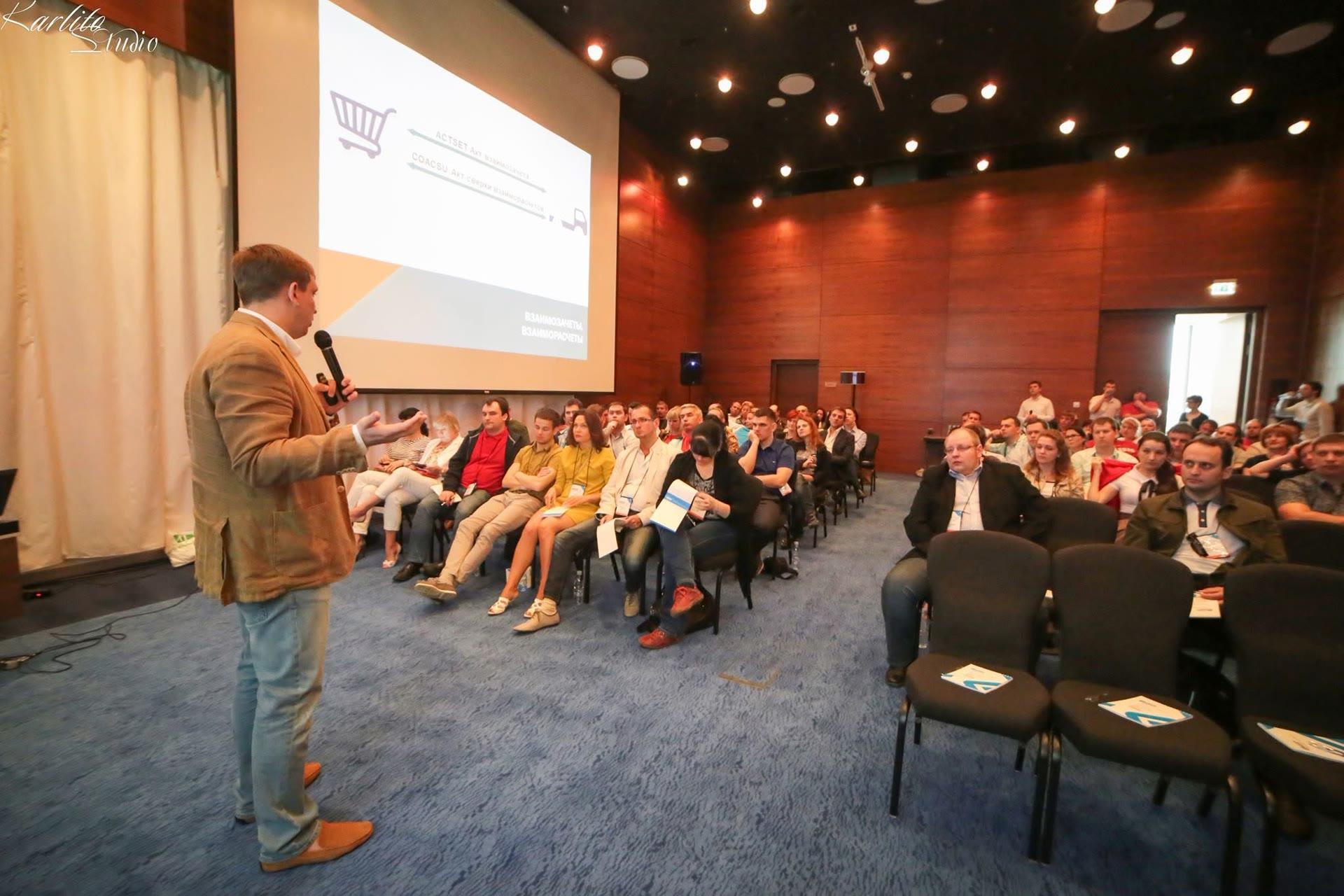
The company's first conference outside its home market: 200 people in the hall, another 340 watching the stream, three languages of simultaneous interpretation, and two evenings to show Georgia.
MEETSY GEORGIA
The brief
A manufacturing company runs an annual conference for its staff and partners. This time the venue was chosen abroad for the first time. The brief was short: a conference hall of international standard, simultaneous interpretation, a stream for everyone who could not fly in, and a cultural programme that shows Georgia across two evenings.
Going abroad does not change the content of a programme. It changes the number of places where the plan can drift. So we split the job into four lines and ran them in parallel: hall, production, logistics, programme. Each line had its own deadline and its own owner, so a transfer question never waited for the stage design to be signed off.
The budget was written line by line, with no umbrella entries such as "technical support". It was fixed by contract once the client approved the concept.
MEETSY GEORGIA
Choosing the hall
We took a 250-seat conference hall in a 5-star hotel in central Tbilisi. The gap between 200 delegates and 250 seats is not politeness. A hall always loses part of its rated capacity to aisles, camera positions, interpreter booths, the production desk and the row that comes out because of the screen. In theatre seating for 200 people, those are exactly the chairs a room "for exactly 200" does not have.
The second thing we count is flow rather than capacity. At the break, 200 people stand up at once. If the room funnels into a single door, the coffee break eats the start of the next session and the queue for coffee runs to the end of it. So we look at the width and the number of exits, the distance to the foyer, and how many service points fit beside it. A central location works for the programme too: the evening venues and a walk through the Old Town are minutes away instead of another transfer.
The site visit happened three months before the event. That timing is not caution. A hall for 200 people and more in central Tbilisi gets booked well ahead in season, and after the visit there has to be time left to change something. Walking the room answers what a floor plan does not: how equipment gets in and whether it fits the service lift, where the power outlets are, what the ceiling height allows for the screen, whether the next hall carries through the partition, and where the booths can stand without taking seats or blocking a route.
MEETSY GEORGIA
Production and three languages
We went with an LED screen. LED holds the image with working light in the room, so the speaker does not present in half darkness and slides with charts stay readable from the back rows. A projector in that setup asks you to dim the hall, and half the footage goes into shadow.
Conference sound is tuned for speech rather than music: intelligibility matters more than level. Radio microphones for questions from the floor go into the plan as a separate item, otherwise the front rows hear the question and the stream does not hear it at all.
Interpretation ran into Russian, English and Georgian. Interpreters work in sound-insulated booths described by ISO 4043; the point of that standard is acoustic separation, so three languages do not bleed into each other or into the room. Delegates get receivers with channel selection, and the booths get a clear line of sight to the stage and the screen.
Interpreters are picked by subject, not by language pair alone. Manufacturing vocabulary does not translate at sight, so the glossary, the decks, speaker names and product names go over in advance. AIIC professional standards put at least two interpreters per language and per booth, because simultaneous work needs handovers and one person does not cover a day of sessions.
Equipment failure is covered by a parallel set. We plan spare radio microphones, a second laptop holding a copy of every deck, a separate internet channel for the stream, and UPS power on the desk and the encoder. The stream has its own operator, and its audio comes off the mixer rather than the camera.
MEETSY GEORGIA
Moving 200 guests in one day
Room blocks went into two hotels. One central hotel rarely releases that many rooms on a single date, and two of them give slack on room categories and late checkouts. The condition is walking distance to the hall, otherwise the morning adds a transfer that depends on traffic.
Arrivals for 200 guests fit into one day. You plan that by flights, not by headcount: collect the arrivals, group the ones landing close together into one transfer, put a vehicle of the right size and a greeter with a sign on each cluster. Boarding time carries a buffer for passport control and baggage, without which the first delay drags the whole chain with it. The rooming list goes to the hotels in advance and early check-in is agreed separately, so a guest off a night flight walks to a room instead of a lobby.
MEETSY GEORGIA
Two days in the hall
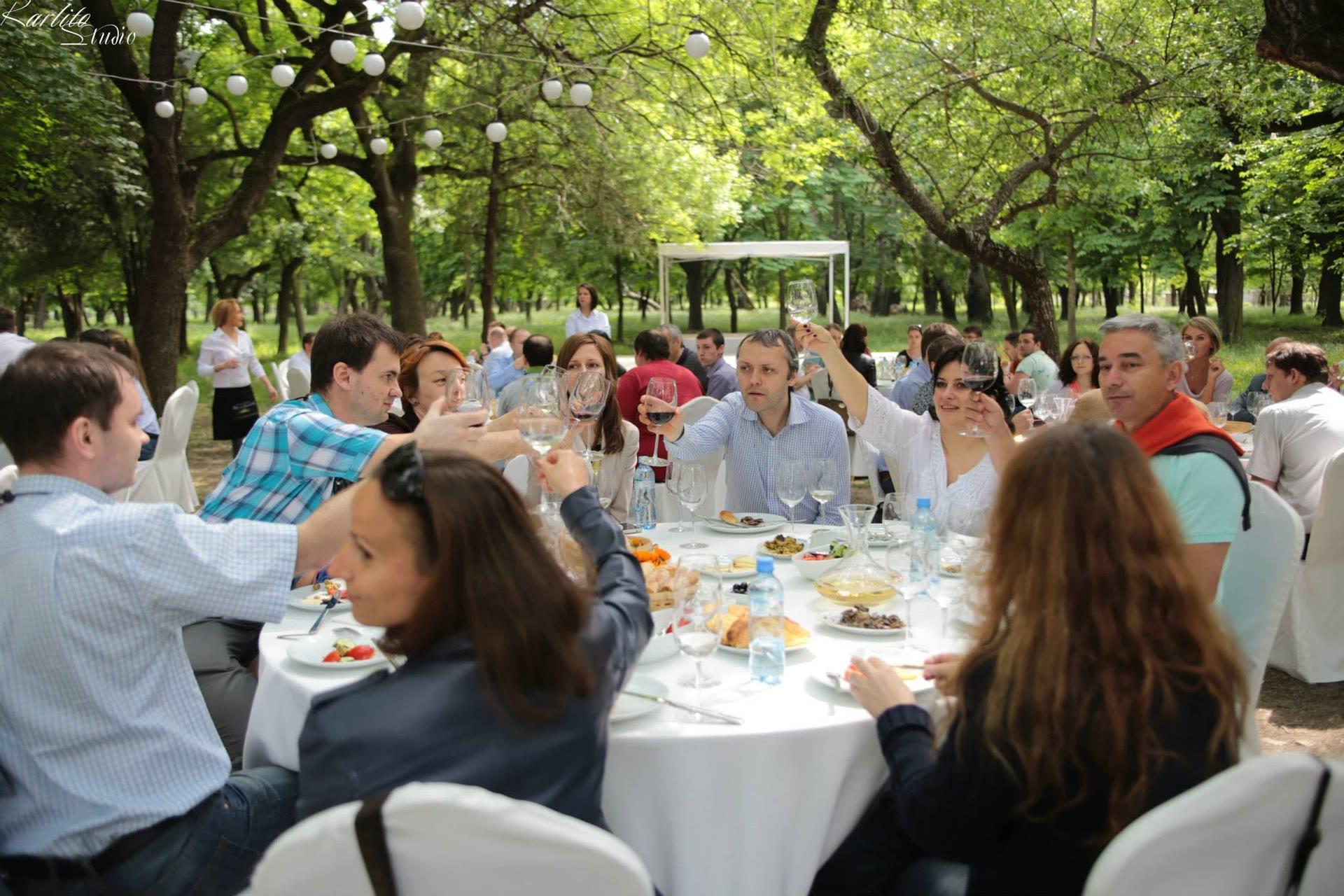
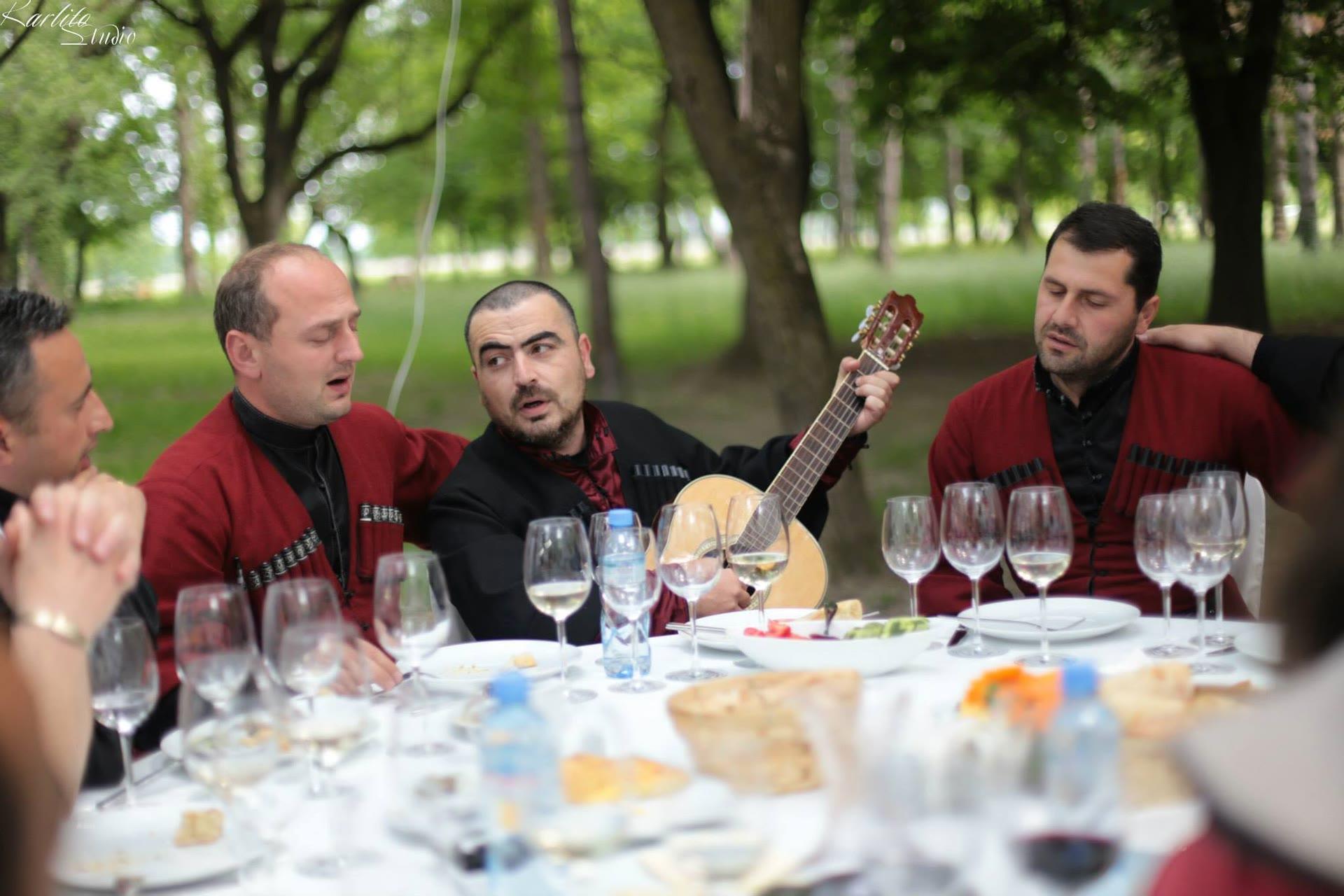
The business programme ran two days and twelve breakout sessions. Day one: plenary session, panel discussions, coffee breaks with churchkhela. That evening, dinner on a panoramic terrace over the Old Town. Day two: breakout tracks by function and awards for the best teams. The close was a gala dinner in an Old Tbilisi restaurant with a tamada and live music.
During the event the team holds positions instead of following the client around. One coordinator at the entrance with the lists and the badges, a second in the hall at the desk and on timekeeping, a third on the floor with the interpreters and the equipment, a fourth on the line with hotels and transport. Everyone shares one chat and one radio channel, so a question first reaches whoever stands closest and only then becomes everybody's. On site, issues were resolved in an average of fifteen minutes.
MEETSY GEORGIA
FAQ
Is a 250-seat hall enough for 200 delegates?
Yes, and it is the working minimum. Aisles, cameras, interpreter booths and the production desk all come out of the rated number, so a room "for exactly 200" seats fewer in practice.
Is a site visit needed when there is a floor plan and photos?
A plan does not show the load-in route, the power outlets, the sound carrying from the next hall, or where the booths can stand. Those answers cost less three months out than three days out.
How many interpreters do three languages need?
AIIC standards put a minimum of two per language and per booth, because simultaneous interpreters work in shifts.
In numbers
delegates on site
stream viewers
languages of simultaneous interpretation
days of business programme
breakout sessions
average time to resolve an issue on site
The company's first conference held abroad
Annual Conference for 200 Participants in Tbilisi
Outcome
The company held its annual conference abroad for the first time and ended up with a format it can run again: a hall with room for the production, three interpretation languages, a stream for everyone who stayed home, and an evening programme that showed the city without a separate sightseeing day.
The budget stayed line by line from the first version to the closing documents, inside the figure fixed by contract when the concept was approved. If you want the same breakdown for your own conference, write to us and we will cost the hall, the production and the logistics against your dates.
Gallery
Ready to create an unforgettable event?
Contact us for a free consultation