Last autumn we costed the same trip twice. A manufacturing company, 45 people, four days in Georgia, identical dates, the same departure airport. The client's existing contractor built the first budget and we built the second. The totals came out almost two times apart, and neither version carried a single padded line.
The HR director asked the obvious question: where is the money hiding. Nowhere. The first budget priced the trip as a company retreat with sightseeing. The second priced it as incentive travel, with a qualification rule for participants, a programme tied to what the people were being rewarded for, and a contingency line for mountain weather that changes faster than a budget gets approved.
That is our answer whenever two quotes for one trip land two times apart: they costed different genres. Below is what an incentive trip actually includes, the eight line items its budget is built from, and how it differs from a retreat, a team building day and a conference.
Four formats that arrive in the same email
We regularly receive briefs where "retreat", "team building" and "incentive" sit in one paragraph. The phrasing feels natural and hides three different tasks with three different budgets.
| Attribute | Incentive | Team building | Company retreat | Conference |
|---|---|---|---|---|
| Purpose | reward a delivered result | improve how a team works together | mark a date, reinforce belonging | deliver content, gather an industry |
| Who travels | people who cleared a threshold | a whole team or department | any employee who wants to come | attendees by role and registration |
| Duration (our practice) | 3 to 5 days with overnights | 1 to 2 days, often no overnight | an evening or a single day | 1 to 3 days of sessions |
| Who sets the task | commercial director, owner | team lead, HR | HR, admin function | marketing, industry committee |
| What moves the budget | accommodation grade, programme exclusivity | methodology and facilitator | catering and venue | AV, hall, interpretation |
| How it is measured | threshold hit, retention, requalification | feedback, observed behaviour | attendance and response | registrations, leads, coverage |

Formats do combine, and there is nothing wrong with that. A business session by day and an incentive programme by night is a workable structure. Trouble starts when the combination happens silently: one budget then carries a hall with a projector, a methodology facilitator and a premium dinner in Kakheti, while three different people still think they own the outcome.
Why the qualification rule matters more than the itinerary
The first question we put to an HR director sounds dull: by what rule does a person land on the list. The rule can be anything you like, whether percentage of plan, growth against last year, tenure or a manager's nomination. What matters is that it was announced in advance and reads the same way to the people who travelled and the people who did not.
An incentive trip starts with a line stating who is going and why. Until that line exists, you are costing a retreat.
A practitioner laid out the mechanics well in a thread on r/marketing about the purpose of corporate incentive travel: an internal programme along the lines of a President's Club, a threshold expressed as growth against last year, qualification measured at period end. The same thread also holds the shortest answer to why companies do this at all: "It's cheaper than raising salaries." Cynical phrasing, accurate economics. A trip costs money once. A raise costs money every month and stops reading as a reward within a quarter.
The qualification rule reshapes the programme too. A group that arrives as winners needs status: a dinner of their own, access a regular tour group never gets, a personal word from the founder. A group that arrives as a department needs shared work. Same valley, same hotel, different scripts and different price.
The eight line items behind an incentive budget
We keep every incentive budget in eight lines. The set of lines is close to identical for any group, and it is what fills each line that creates the spread between quotes from different suppliers.

| Line item | What sits inside | What moves the price | Who owns it |
|---|---|---|---|
| Flights and arrival | tickets, baggage, connections, airport meet | season, booking lead time, single or scattered departures | company or agency by agreement |
| Accommodation | rooms, grades, early check in, late check out | hotel category, single occupancy, location | receiving agency |
| Transfers | airport, inter-location legs, evening drop offs | vehicle type, mileage, vehicles per group | receiving agency |
| Catering | breakfasts, lunches, dinners, gala dinner, water and road snacks | service format, alcohol, dietary requirements | receiving agency |
| Programme | activities, venues, tastings, entry tickets, equipment | venue exclusivity, number of parallel tracks | receiving agency |
| On-site staff | guides, group coordinator, facilitator, interpreter, photographer | languages, staff per head count | receiving agency |
| Technical production | sound, light, screen, stage, branding | scale of evening formats, outdoor venues | subcontractor managed by the agency |
| Insurance and contingency | medical cover, fallback options, buffer for substitutions | cover level, share of outdoor activity | company and agency jointly |
Two of those lines deserve a note, because they are the ones buyers cut first.
Contingency. Mountain Georgia runs on its own weather. A jeep route can close at a pass, a helicopter transfer can be grounded by wind, an open-air dinner venue can be lost to rain. Contingency does not buy air. It buys a second scenario that is already designed and held, so nobody has to make decisions while a coach idles on a mountain road. In a discussion of company retreats on r/chubbytravel an experienced participant flagged altitude specifically: employees on his programme had picked up altitude sickness at a base around 8,000 feet. Things like that get handled when the location is chosen, not on the ground.
On-site staff. One coordinator for a group of 15 and one coordinator for a group of 45 are two different trips. The coordinator holds the timing, talks to venues, sorts out rooms and knows where to take someone who feels unwell. The line is easy to strike out when comparing quotes, and its absence surfaces exactly once, loudly.
Why two quotes for one trip land two times apart
Back to the manufacturing company and its 45 participants. The gap was assembled from six decisions, each of which looks minor inside its own line.
- Room grade and occupancy. Double occupancy against single occupancy moves the accommodation line more than any negotiated discount. For an incentive group single occupancy is often non-negotiable: these people arrived as award winners, not as a coach tour.
- Catering priced on consumption against a fixed package. The package looks cheaper on paper and costs more in reality when half the group does not eat meat or drinks only water.
- Venue exclusivity. A tasting in a shared hall and a tasting with the winery closed for your group read as one activity in a proposal and as very different numbers in a budget.
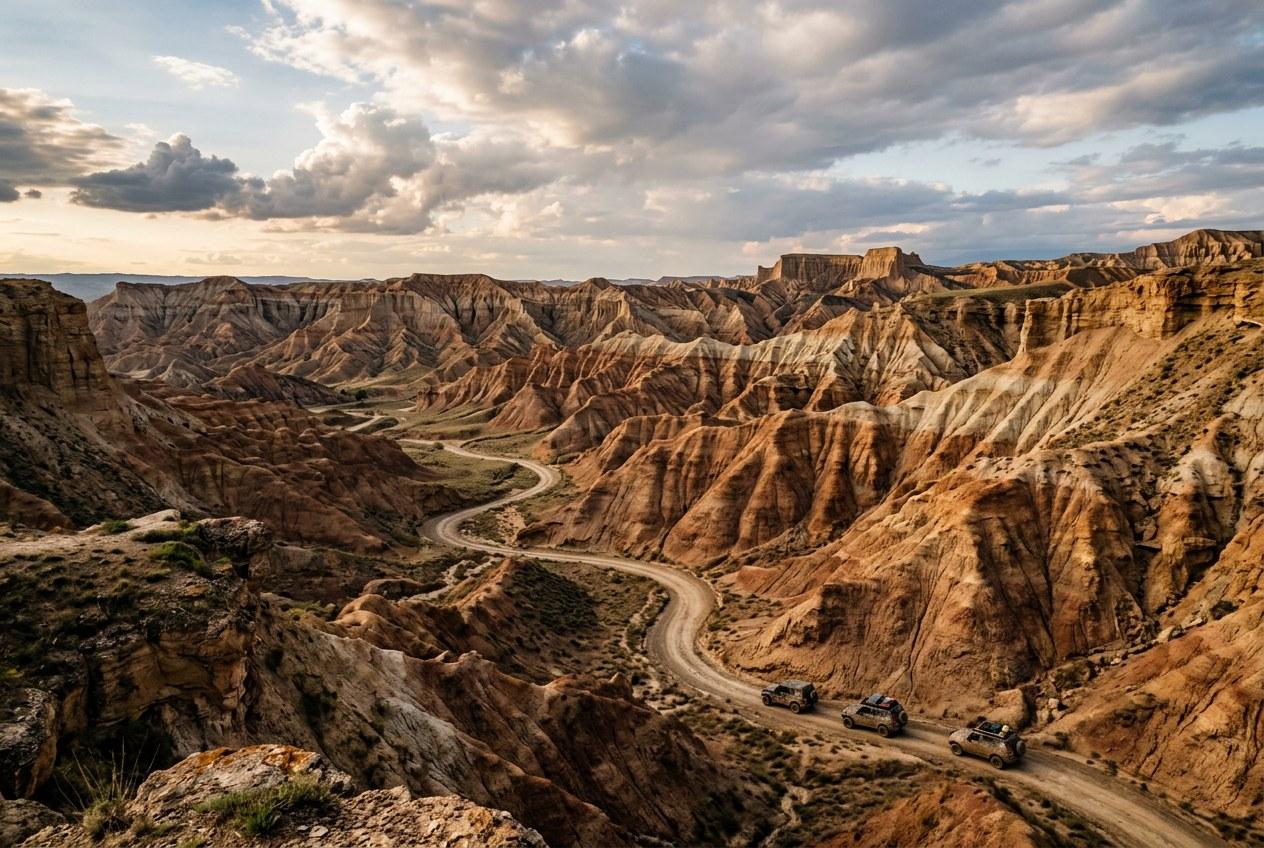
- Vehicle density. One large coach is cheaper than three minivans and slower than them on mountain roads. That is a trade between a budget line and hours of programme.
- Number of on-site staff. See above.
- Contingency. The first budget simply did not have it.
In our practice accommodation and catering together take more than half the budget, while the programme, the thing the trip was called for, takes a visibly smaller share. That proportion misleads buyers into cutting the programme. Cutting the programme removes precisely what people cleared the threshold to receive.
Tying the trip to a business goal
A reward trip rests on three decisions, all of which are made before a country is picked.
The threshold. What exactly has to happen for a person to travel, and by what date. The threshold is announced to everyone, not only to the people already close to it.
The meaning of the reward. What the company is thanking people for: volume, client retention, a launch, quality. The answer decides who travels and what the evening part of the programme looks like.
The return point. What the company wants to see afterwards. Requalification by the same people next period, lower attrition inside the selected group, colleagues who want a place on the next list. We will not promise a percentage uplift, since too much of it sits outside the trip. Fixing a metric before the launch and looking at it a quarter later is entirely doable.
One objection is worth saying out loud. There is a large thread on r/changemyview arguing that team building activities waste time and money. Much of it is fair, and most of it describes events that happened because somebody decided it was time for an event. An incentive trip is protected from that criticism to the exact degree that its threshold is transparent. Once people understand why these particular colleagues are travelling, the trip stops reading as a corporate obligation.
Six mistakes we see most often
- Comparing totals instead of lines. Ask for the budget broken into the eight items above. Comparing numbers without structure tells you nothing.
- Announcing the reward before the trip has been costed. The threshold is public, people clear it, the budget does not close, and the company gets to choose between its reputation and its money.
- Leaving unplanned gaps in the programme. In the same r/chubbytravel thread, a participant who disliked an offsite explained it briefly: the organisers left a lot of dead time and assumed the group would occupy itself.
- Forgetting the people who cannot travel. In a thread on r/humanresources an experienced specialist put it plainly: "Not everyone likes to travel, or can travel, or wants to travel." An alternative for those who decline is designed in from the start.
- Leaving the tax question until later. The same thread raises the taxability of the trip's value, including the case where it is drawn as a prize. We give no tax opinions: check this with your tax adviser and the official guidance of your own tax authority before the programme is announced.
- Hiring a supplier with nobody on the ground. An intermediary reselling a local programme cannot replace a venue in two hours. Test it simply: ask who specifically will be with the group every day, and which city that person lives in.
Where an incentive trip will not help
The honest caveat, which we raise at the first meeting. A trip does not repair management problems. If goal setting is broken, the bonus system does not work or a manager does not talk to people, four days in the mountains buy a short pause and return everyone to the same configuration. Incentive travel amplifies what already exists: it makes a working motivation system visible, and it does the same for a broken one.
Second, some people genuinely prefer the cash equivalent. That is a reasonable answer and belongs in the programme rules rather than being treated as resistance.
Frequently asked
How long is an incentive trip to Georgia? In our practice the working range is three to five days with overnights. Below three days, two dates go to travel and adjustment and almost no programme survives. Above five days the group tires while accommodation and catering keep rising in a straight line.
Who pays for an incentive trip? The company pays for the trip in full, since it forms part of the reward system. Personal spending by participants, such as souvenirs, extra drinks or a late check out, is usually kept outside the budget and agreed before departure.
Is a reward trip taxable? That depends on the employer's jurisdiction and on how the costs are recorded. The question comes up constantly among HR specialists, including cases where the trip is drawn as a prize. We give no tax opinions: check with your tax adviser and the official guidance of your country's tax authority before announcing the programme to staff.
Could we just pay a bonus instead? Sometimes that is the more honest option. A bonus is universal, but it dissolves into an employee's budget and creates no shared experience. A trip is remembered and carries status inside the company, though it requires that a person can and wants to travel. Some teams solve it by offering a choice between the trip and its cash equivalent.
What do we do about people who do not want to go? Design the alternative from the start. Reasons for declining can be medical, family related or simply personal. Declining the trip must not read as declining the reward, or the programme backfires.
How should free time be handled? Free time is planned as its own line: two or three optional choices for the same slot, so everyone picks for themselves. Unplanned gaps are the most common source of complaints about offsite programmes.
Who owns the programme, HR or the agency? The company owns the qualification rule, the group composition, the business goal and internal communication. The receiving agency owns feasibility: transport, venues, timing, people on the ground and fallback scenarios. The overlap is programme sign off, and it is best closed with one accountable person on each side.
How does an incentive differ from a conference? A conference has an agenda, speakers and technical requirements, and attendance is decided by role. An incentive trip has the reward itself as its agenda, and attendance is decided by results. The two get combined: sessions by day, incentive programme by night. That works, provided it is costed as two budgets in one document. We covered the business side in our guide to organising a conference in Tbilisi.
What do you need to start costing? Five inputs: group size, qualification rule, date window, per person budget ceiling, and what the company is rewarding. With those five answers we build the first version of an eight line budget without a meeting.
An incentive trip is costed from its qualification rule, and everything else in the budget follows from that decision. We covered locations and formats for different tasks in our round up of venues for corporate events in Georgia, and the logic of team formats in our piece on team building in Georgia. Incentive programmes here are usually assembled from corporate tours, wine and gastronomy programmes in Kakheti and jeep expeditions.
We have been building business travel in Georgia for fifteen years and we live here, which is why we defend a budget line by line rather than by its total. Send us the five inputs above and we will come back with the breakdown. Discuss your project: hello@meetsygeorgia.ge, +995 555 655 445, Telegram @meetsygeorgia.