On the eighth of January a coach carrying forty employees sat at the exit from Gudauri for close to an hour while the pass was cleared after an overnight snowfall. The day had been scheduled tightly, with dinner back in Tbilisi. We had already moved that dinner up to the hotel, so the programme did not collapse, it simply changed order.
Those things are not decided on the day of the trip. They are decided when a company picks a team building format and the month it runs in.
The real choice in Georgia does not look like "quest or cooking class". It looks like a calendar: when the Gudauri lifts open, when Kakheti picks its grapes, how much water the Aragvi carries in late July, which mountain roads keep their own schedule that month. Below is how we at Meetsy build a programme around the season, the group size and the purpose of the meeting. On why bring a team to Georgia at all we have a separate piece: why team building in Georgia works.
The season sets the format before the script does
Georgia is compact. Gudauri sits about 120 km from Tbilisi and the drive takes 2 to 2.5 hours (wander-lush.org, Wikipedia). That compactness makes it easy to believe any format is available in any month. In practice every region runs on its own window, and the windows do not line up.
The winter window belongs to the resort. The 2025/26 season in Gudauri officially opened on 27 December 2025, with lifts running from 10:00 to 17:00 (gudauri.info). The two previous seasons ran 21 December to 17 April and 20 December to 16 April (wander-lush.org); the resort directory gives a general window of late December to late April (skiresort.info). A company planning a ski offsite for mid December risks arriving to closed lifts.
The autumn window belongs to the grapes. Rtveli, the harvest, usually falls in the second half of September in Kakheti and runs into mid October, and in some years the start shifts to early September (Wikipedia, georgia.to). Nobody sets that date. The sugar in the berry sets it.
The summer window belongs to the water. Rafting on the Aragvi near Pasanauri runs from April to October, but the character of the run changes: April and May are more demanding, July, August and September are calmer (bord.ge, getur.ru). For a team with mixed fitness those are two different events under one name.
A team building format in Georgia is picked from the calendar rather than from a menu of activities. Lifts, grapes and water levels do not move to suit a corporate schedule.
Winter: Gudauri, ski offsite and a strategy session by the fire
A winter trip rests on one assumption: the team goes up and stays up. Gudauri lies above two thousand metres, and any attempt to sleep in Tbilisi and ski at the top turns the programme into four hours of coach travel every day.
What we usually put into a three day winter format:
- Arrival day: airport transfer, check in, dinner on site and a short opening word from the leadership. No activities after the road.
- Full day: ski school for beginners and free riding for everyone else in the morning, a working session in the hotel conference room in the afternoon.
- Departure day: snowshoes or a walk, lunch, and the descent to Tbilisi with time to spare.
A ski offsite has one awkward property: it splits the team into those who ski and everyone else. We close that with a second track (snowshoeing, tubing, a food block, a banya) so the afternoon brings everyone back together. The r/corporate thread on what people actually do on company retreats is worth reading before the brief: half the complaints there are about activities part of the group physically cannot join.
In winter Gudauri works best for groups of 12 to 40. Above that the hotel has to be split, and splitting a group across hotels feels heavier in the mountains than in the city, because nobody walks between buildings through snow in the evening.
Spring and autumn: Kakheti, rtveli and jeep expeditions
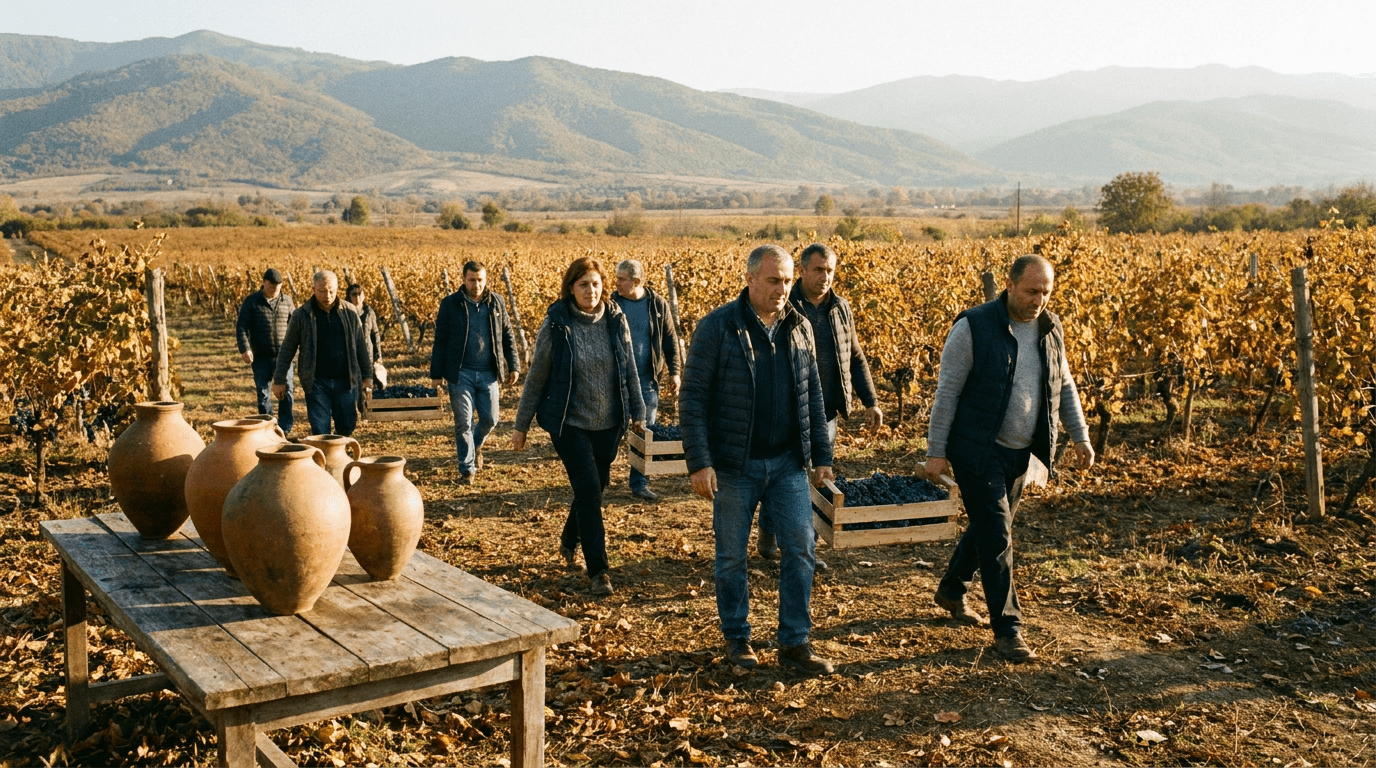
May, June, September and the first half of October are the most flexible months. The temperature allows a full day outdoors, and Kakheti offers something a ski slope cannot: shared physical work with a visible result.
A wine programme during rtveli is not a tasting. The team cuts bunches, carries crates, presses grapes, and in the evening sits down at a shared table where the person responsible for the food is the same one who showed them how to hold the shears in the afternoon. That format sits well with mixed teams, because age and fitness stop being a barrier. We build programmes of this type under wine tours and corporate tours.
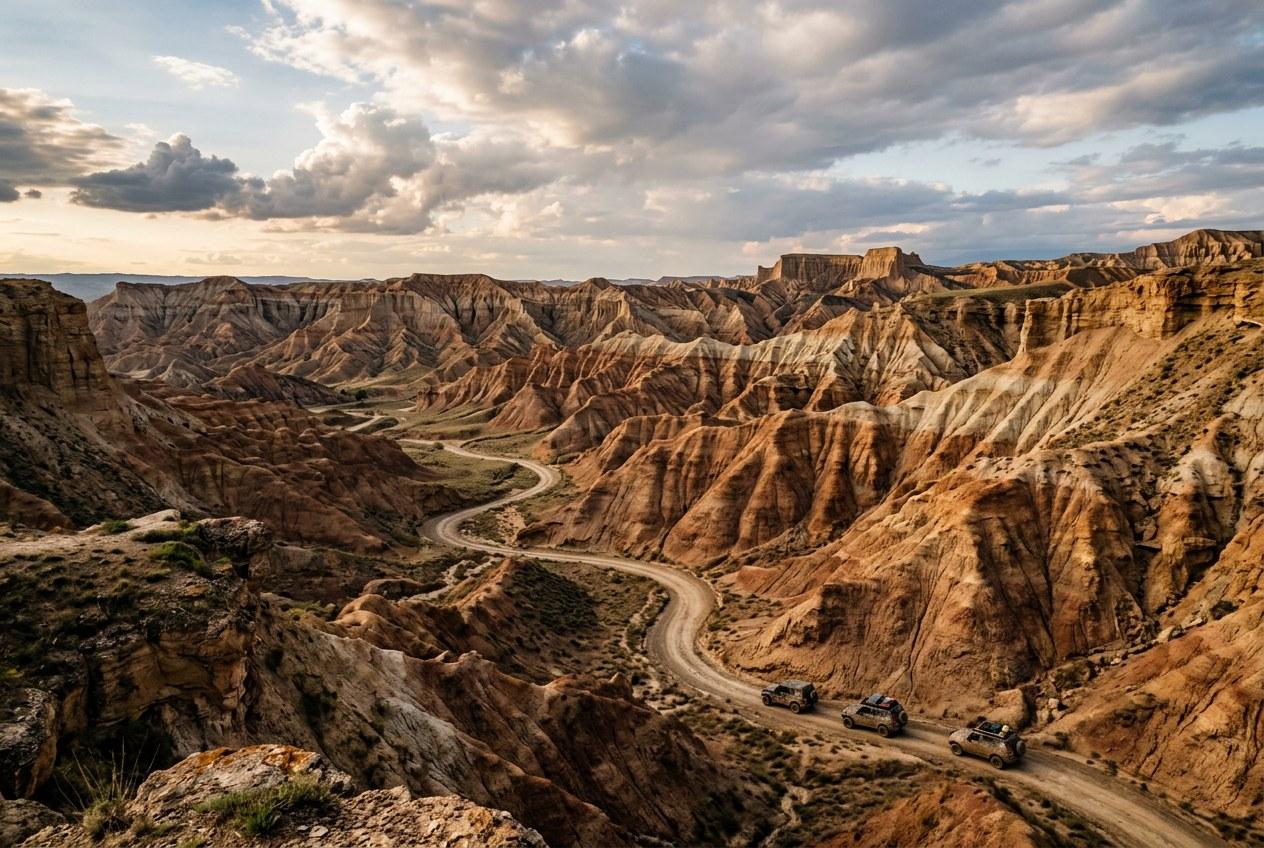
The second spring and autumn format is the jeep expedition. The group splits into crews of 4 to 6, each crew gets a route sheet, waypoints and roles: navigator, quartermaster, the person in charge of filming. Crews meet at checkpoints and pool their results in the evening. Of all the formats, this one pushes people hardest into negotiating with each other, because decisions get made on the road rather than in a room. Details are under adventures and jeep tours.
One caveat about autumn: rtveli coincides with high season, and guest houses and wineries in Kakheti get booked out early in September. In our practice, for a group of 40 or more in September we lock venues 3 to 4 months ahead, otherwise the choice narrows to two or three addresses.
Summer: Kazbegi, rafting and high plateaus
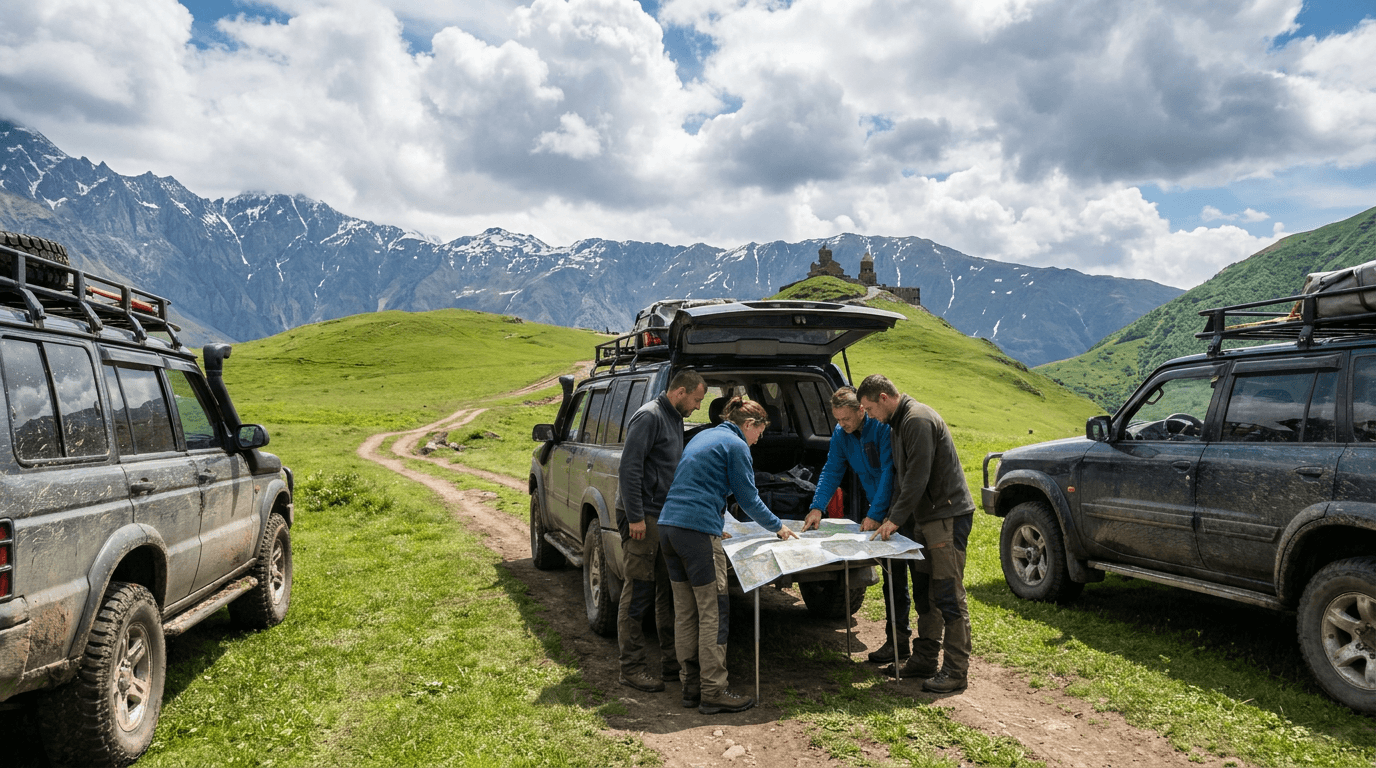
July and August in Tbilisi are hot, and that breaks city programmes: any outdoor activity after midday becomes an endurance test. The logic of summer is simple, take the group up.
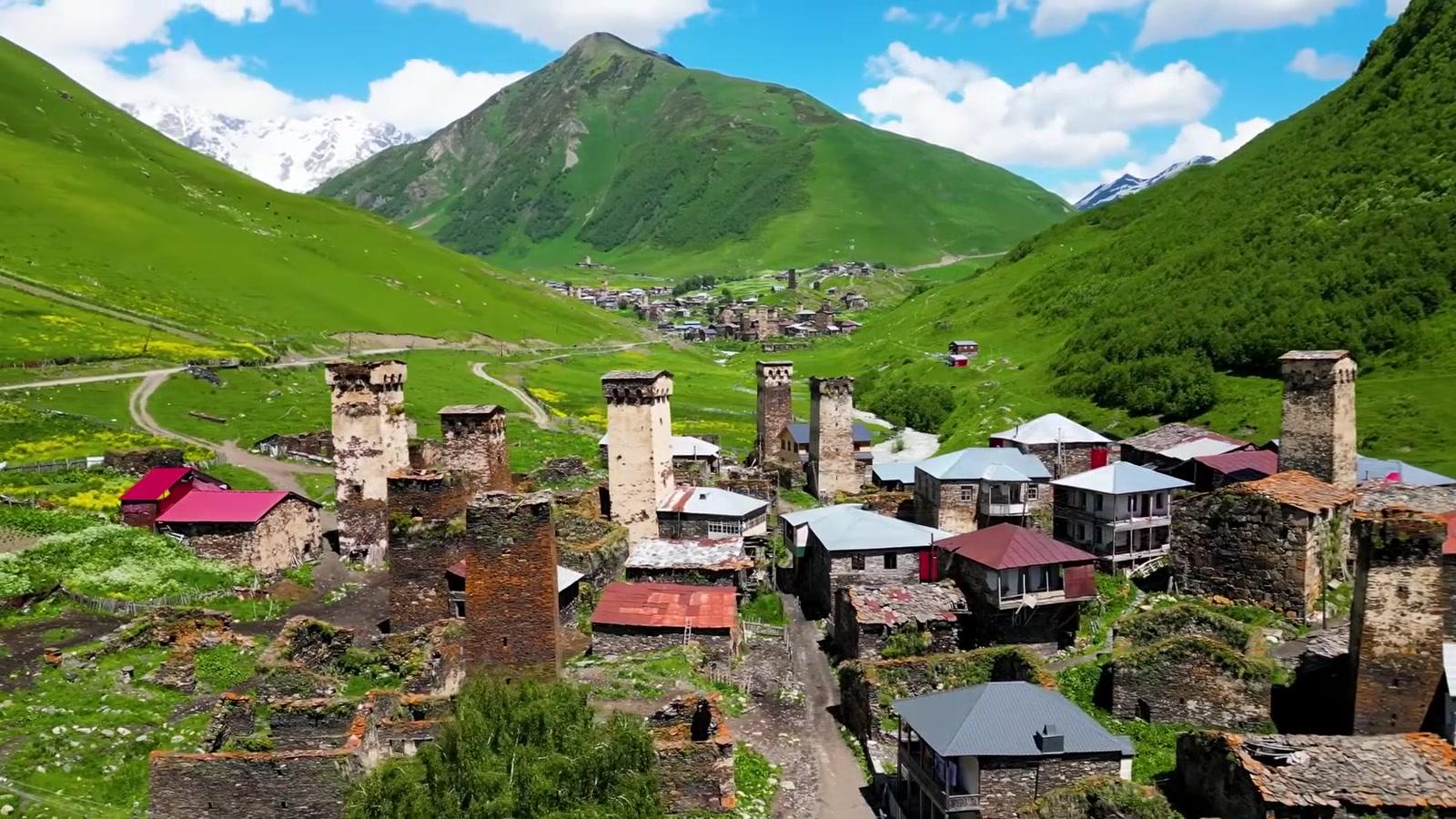
Kazbegi works as the base for a three day format: the climb to the Gergeti church, trips into the Juta and Truso valleys, evening sessions at the hotel. Whether to go for the day or stay overnight comes up even among private travellers, and this r/Sakartvelo thread gives an honest picture: as a day trip it is six hours of road for two hours on site. For a corporate group we offer the day trip version only when the whole point is a change of scenery for one day.
Summer rafting is gentler than the spring run and suits teams with no preparation. We put it in the first half of the day and follow it with something quiet: a picnic, a workshop, work in the open air. Scheduling a rafting run on departure day is a bad idea, wet clothes and an airport transfer go poorly together.
Summer is also the easiest season for split trips: the working part in Tbilisi, the outdoor part in the mountains. The offsite formula thread in r/remotework describes the scheme we see most often with distributed teams: fly in Monday, heavy working sessions Tuesday and Wednesday, evenings out in the city, fly home Thursday. One participant puts it plainly: "Monday and Friday are travel days. Tuesday and Wednesday bear the brunt of the heavy meetings". Georgia fits that scheme well, with mountains two hours from the meeting room.
Shoulder season: November and the second half of April
November, and the gap between the slopes closing and the mountain summer opening, are the two most underrated windows. Snow in Gudauri is either finished or not yet working, the mountain valleys are wet, and Tbilisi in that period is empty and cheap.
What we schedule in the shoulder season:
- City formats: quests through the old town, food battles, workshops in craftsmen's studios.
- Working sessions in Tbilisi lofts and venues with a half day out to Mtskheta or a winery near the city.
- Mixed formats with a conference part. On venues and technical setup we have a guide to organising a conference in Tbilisi and a conferences section.
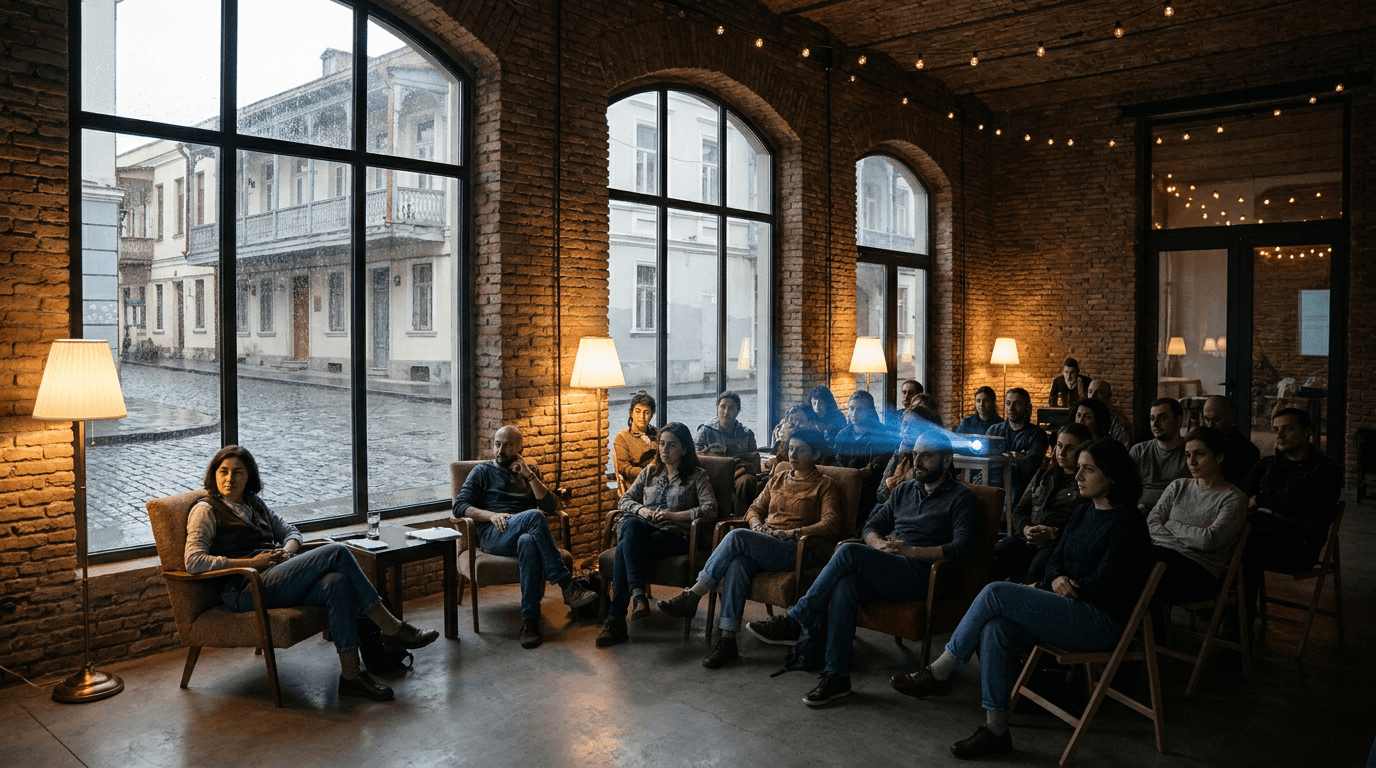
The shoulder season earns its budget honestly: the same venues cost noticeably less in November than in September, and the team gets the city without the queues. We collected the locations in top 5 venues for corporate events in Georgia.
Season, format and group size in one table
| Season | Format | Location | Comfortable group size | What constrains it |
|---|---|---|---|---|
| December to April | Ski offsite plus strategy session | Gudauri | 12-40 | Lift operating dates, capacity of a single hotel, weather on the pass |
| December to February | City year end party | Tbilisi | 40-150 | Restaurant and venue load in December |
| April to May | Jeep expedition through the foothills | Kakheti, Mtskheta-Mtianeti | 12-60 | Condition of dirt roads after the snow melts |
| May to June | Rafting plus picnic | Aragvi, Pasanauri | 12-40 | High water in spring, age and fitness limits |
| June to August | Mountain trip, trekking | Kazbegi, Juta, Truso | 12-50 | Altitude, weather in the valleys, hotel capacity in Stepantsminda |
| September to October | Wine programme, rtveli | Kakheti | 12-100+ | Harvest dates, early winery bookings |
| November, second half of April | City team building, working sessions | Tbilisi, Mtskheta | 12-200 | Weather, short daylight in November |
How group size rewrites the programme
The same activity for 20 and for 120 people is two different projects. The difference sits in the structure of the day rather than in the price per head.
12 to 25 people
The most flexible size. One venue, one coach, one dinner table. You can run formats built on personal contact: a class with a chef, crews in a jeep tour, a tasting led by the winemaker in person. The programme can be reshaped mid day if the weather turns.
40 to 60 people
Engineering starts here. The group no longer fits one minibus or one restaurant room without a second seating. We split it into subgroups of 12 to 15 and run activities in streams: while the first group is at a workshop, the second is at a tasting, and 90 minutes later they swap. The key resource is coordinators. For 60 people in the mountains you need at least three, otherwise the gather up after every stop eats 20 minutes.
100 people and above
The format shifts from activities to staging. What works is a venue with one large hall, a shared theme for the evening, live music and standing stations instead of sequential workshops. Kakheti wineries with big courtyards and Tbilisi venues handle a hundred guests and more, mountain hotels often do not. We run those projects as corporate events, with a separate production plan and technical rider.
Skeleton of a day for 60 people, autumn, Kakheti:
09:30  departure from Tbilisi, 2 coaches, one coordinator in each
11:30  winery 1, split into 4 streams of 15
       stream A - grape picking      stream C - bread workshop
       stream B - the press house    stream D - tasting
13:00  streams rotate (90 minutes per round)
14:30  shared lunch in the courtyard, supra
16:30  one hour team block for everyone
18:00  departure, arrival in Tbilisi 20:00
The purpose of the meeting shifts the weight of the blocks
Season and size give you the frame, the purpose fills it. Four typical goals we hear at briefings:
- Bring a distributed team together in person. More unstructured time: long dinners, shared transfers, evenings with no programme. Activities come second.
- Run a strategy session. You need a room, equipment, quiet and a facilitator. The mountains work as a backdrop rather than as content: one strong activity a day, the rest is work.
- Celebrate the year. Staging, dinner, music, toasts. Here Kakheti and Tbilisi beat the mountains.
- Integrate a new team after a deal. Mixed crews in a jeep tour, or shared physical work at rtveli: people get to know each other faster through a task than over a buffet.
Naming the purpose before choosing the location saves more money than haggling over the estimate. In the r/smallbusiness thread on company retreats business owners repeat the same observation: the trips that failed were almost always the ones where the goal was never said out loud.
What breaks, and how we plan around it
The honest part. Mountain Georgia runs on its own rules, and some of them are not negotiable.
The Jvari Pass. The Gudauri to Kobi section of the Georgian Military Highway gets closed during heavy snowfall and avalanche risk, sometimes for trucks only, sometimes completely (an example of a closure). The status is published by the Roads Department of Georgia. The practical consequence: in winter we never put Kazbegi into a programme that requires returning the same day, and we always keep a fallback scenario inside Gudauri.
Altitude. Gudauri lies above two thousand metres. Part of the group feels it on the first day: headache, poor sleep. We do not schedule heavy working sessions for the first evening, and we warn people in the invitation rather than on arrival.
Weather in the valleys. Juta and Truso can close for a day in summer because of rain and the state of the track. For every mountain day we hold a city or wine alternative, booked in advance.
Booking lead time. In our practice September and December get taken across mountain and Kakheti venues 3 to 4 months ahead, other months 6 to 8 weeks. A group of 100 or more in high season without an early hold almost always ends up moving its dates.
None of this stops a trip from happening. What hurts is finding out a week before the flight.
Frequently asked
Which month is best for bringing a team to Georgia? May, June, September and the first half of October give the widest choice of formats: the mountains, Kakheti and the city all work. For a ski offsite it is January and February, for a wine programme it is rtveli in the second half of September.
Can you run team building in Gudauri in summer? Yes, though it becomes a mountain trip rather than a ski trip. In summer Gudauri works as a base for trekking, paragliding and quad biking, and some lifts run as well. A ski offsite is only possible in the winter window, roughly from late December to mid April.
How many days does a corporate trip to Georgia need? Three nights cover a full programme with one mountain or wine day. Two nights work for a group flying in from a neighbouring country. A single day only makes sense inside the city.
What if half the team does not ski? Run a second track at the same time: snowshoes, tubing, a food block, a city tour. And bring everyone back together in the afternoon so the evening is shared.
Is a programme for 100 people or more realistic? Yes, with a venue that has one large hall or a big courtyard. Tbilisi and Kakheti handle it, mountain hotels usually require splitting across two buildings. For those groups we build a separate production plan.
How far in advance should we book? September and December 3 to 4 months ahead, other months 6 to 8 weeks. That is our own practice with the venues we work with.
How likely is it that the mountain road closes? In winter that risk is always present, the Gudauri to Kobi section closes during snowfall and avalanche risk. We plan winter programmes so the group can spend the day on site without a compulsory crossing of the pass.
Do we need a separate interpreter for a mixed team? Our coordinators work in Russian and English. For programmes with local craftsmen, winemakers and guides we provide support in the group's language, and it is included in the programme price.
Choosing a team building format in Georgia stops being a matter of taste the moment the calendar goes on the table: lift dates, harvest dates, road conditions and venue capacity. What is left to decide is what the team should take home with them.
Tell us about the group, the dates and the purpose of the meeting, and we will build a day by day programme with a transparent estimate. Let's discuss your project: hello@meetsygeorgia.ge, +995 555 655 445, Telegram @meetsygeorgia.