The email lands on a Thursday evening. Sixty people, three nights, late October, Tbilisi plus the mountains, budget open to discussion. Departure is five weeks away.
We answer within the hour, and the first half of the answer is almost never about money. It is about the calendar. Late October in Kakheti is the tail of rtveli, the grape harvest, and the venues where sixty people sit at one table were booked in spring. Five weeks is enough time to run an offsite. It is not enough time to run the offsite described in that email.
A company offsite abroad rarely breaks on budget. It breaks on lead time, on a mismatch between the mental picture and the season, and since 2026, on who is legally allowed to walk your group around the country. What follows is the conversation we have with clients on WhatsApp several times a week, written down.
What a corporate offsite in Georgia costs, line by line
The honest answer to "how much" is dull: the per-person range follows hotel class and number of nights, and everything else is downstream. Public benchmarks are thin, so we quote only the ones you can open and check.
Agencies working outside Georgia publish wide bands. Affinity Travel puts a corporate offsite at 1,400 to 3,000+ dollars per person excluding flights; Wise cites 1,000 to 2,500+ pounds per person for international retreats with flights included. Local figures run lower: the Tbilisi agency Sakhva lists a corporate tour of Tbilisi from ₾2,200 per group of 5 to 30 people. Tbilisi-based Eventive puts the gap against Western Europe at 40 to 60 percent. That is their estimate rather than ours, but the order of magnitude matches what we see.
A quote is built from lines, not from a package. Here is how we break it out in the first estimate, so your finance team has something it can defend.
| Budget line | What sits in it | What moves the number most |
|---|---|---|
| Flights | Tickets, baggage, connections | Departure city and how early you buy; group fares want 8+ weeks |
| Accommodation | Nights, room type, early check-in | Hotel class and single versus double occupancy |
| Ground transport | Airport runs, inter-region transfers, evening shuttles | Number of locations in the programme, not the mileage |
| Food and drink | Breakfasts, lunches, gala dinner, coffee breaks | Dinner format and the drinks package |
| Venue and AV | Room hire, sound, screens, simultaneous interpreting | Whether you need interpreting and recording; the most underestimated line |
| Activities | Team building, excursions, jeep programmes, wineries | Splitting the group into sub-groups |
| Contingency and insurance | Medical cover, weather plan B, the unexpected | Mountain days and time of year |
We always carry a contingency. In the Georgian highlands a plan B earns its place: the road to Kazbegi closes on weather, and the evening the group flew in for needs a backup venue half an hour away.
When to go: the season windows and what they do to your programme
Georgia hosts groups year round, but each season carries a different programme, and "just move it a month" usually means rewriting half the days. According to the National Statistics Office of Georgia, 5.8 million international visitors came to the country in 2025, up 7.0 percent year on year; civil.ge reports 6,856,809 international visits over the same period. For planners the implication is blunt: in high season the good venues go early.
| Window | What works | What to watch |
|---|---|---|
| April to early June | Tbilisi, Kakheti, canyons, first jeep routes | High passes may still be closed |
| Late June to August | Mountains, Batumi and the coast, evening formats | Tbilisi is hot by day, so conference sessions move to the morning |
| September to October | Rtveli in Kakheti, best weather for mixed programmes | The busiest window; venues are booked in spring |
| November to early December | City conferences, food programmes, lower rates | Short daylight, so the schedule runs tighter |
| Late December to April | Gudauri and ski formats | The Gudauri season runs from late December to late April (skiresort.info); the 2025/26 season opened on 27 December (friendly.ge) |
September and October deserve a note of their own. Rtveli is not staging: the wineries are genuinely working, and a group walks into a real process rather than a reconstruction of one. The price is competition for dates. We discuss October enquiries in March and April. What the wine half can and cannot deliver is set out under wine and food programmes.
How far ahead to start: a week-by-week countdown
The most common question in a first email is whether there is still time. Below is the real countdown for a group of 40 to 80. Under 25 people it compresses by roughly half; above 150 it stretches by another month.
- 14 to 10 weeks out. Lock the date window and arrival city. Agree the skeleton: how many nights, how many working sessions, how many days out of town. Request hotel blocks, which at this range can still be held without penalties.
- 10 to 8 weeks out. Confirm hotel and venue. Ask airlines for group fares. Collect the participant list with passport details, because nobody produces it earlier and it starts costing money later.
- 8 to 6 weeks out. Finalise the day-by-day programme with timings. Book restaurants and wineries. Order AV for the conference half, interpreting included if you need it.
- 6 to 4 weeks out. Gather diets, allergies, medical limits and activity restrictions. Sign off a plan B for every day out of town. Issue insurance.
- 4 to 2 weeks out. Coach seating, dinner seating, badges, printed materials. Test transfer timings against real Tbilisi traffic rather than against a map.
- Final week. Final lists, a named coordinator for each bus, check-in on arrival.
Five weeks before departure still leaves a choice: the programme you imagined, or the programme that can be delivered on those dates without compromising on venues.
We take tight timelines, and we take them often. The conversation simply starts with what has to give: usually a specific winery, a specific view from a restaurant, or a single hotel for the whole group.
Logistics: flights, transfers, hotels
Tbilisi airport has direct service to 68 destinations flown by 52 airlines (directflights.com), and handled 4.75 million passengers in 2024 (Wikipedia). For planning purposes that means almost any European or Middle Eastern departure point works either direct or on one connection. Georgia's second airport, Kutaisi, is often cheaper and adds 3.5 to 4 hours of road transfer to Tbilisi.
Three things clients routinely underestimate in our quotes:
- Different departure cities. If the team assembles from four countries, arrivals spread across eight hours. Either budget a meeting coordinator for the full day, or set the common start for day two and keep day one loose.
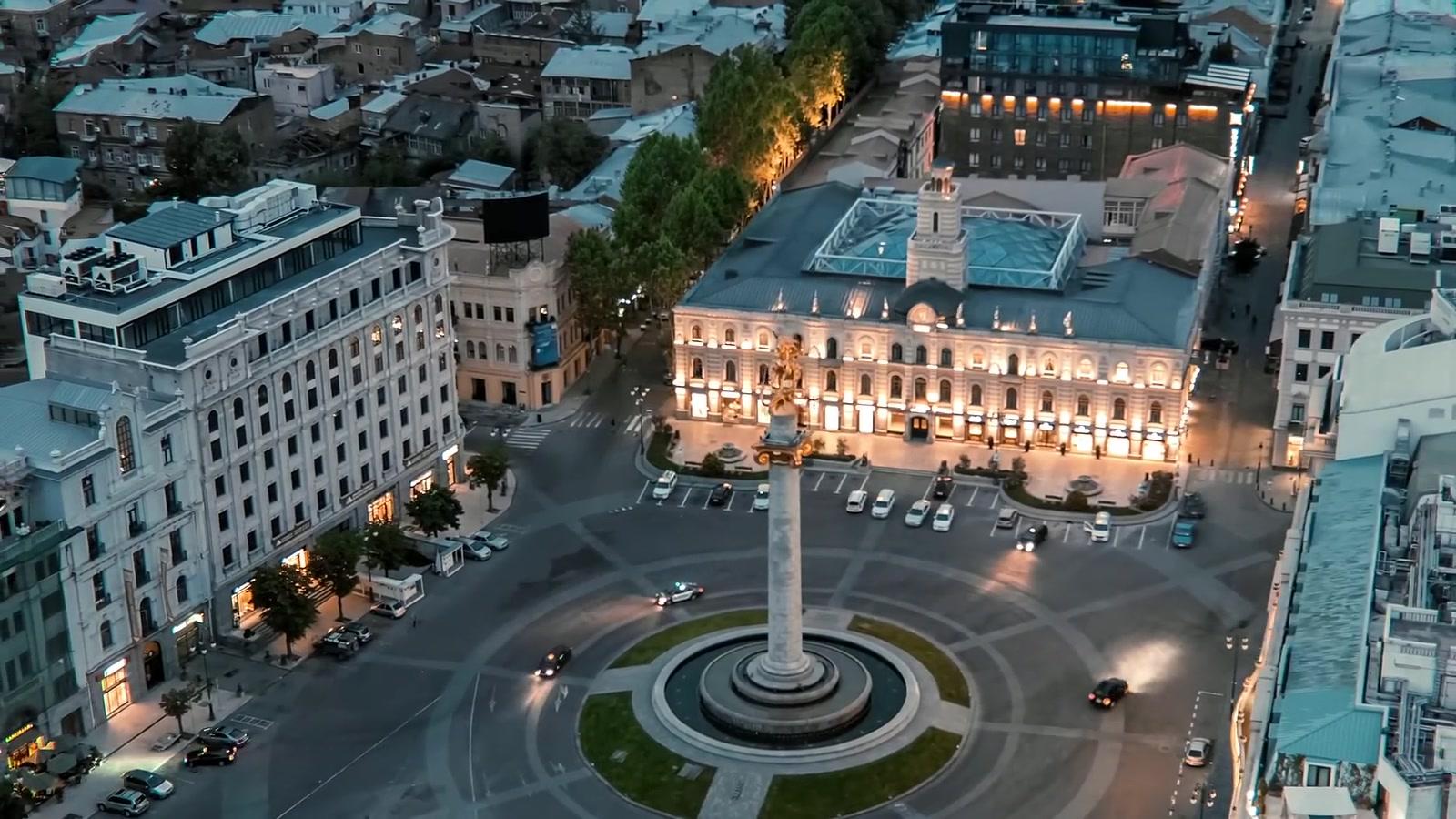
- Tbilisi traffic. At peak hours, 12 kilometres across the city takes as long as 40 kilometres on the highway. Evening runs between restaurant and hotel get planned on observed times.
- One hotel for the whole group. For 60+ people this constrains the choice more than the budget does. We either find single-property accommodation early, or we say plainly that two neighbouring hotels with one assembly point is the better answer.
The conference half is its own discipline. Rooms, AV, interpreting and timing are covered in more depth in our guide to organising a conference in Tbilisi and under conferences and forums. We work with groups from 20 to 1,200 delegates, and the complexity break sits at roughly 150 participants, beyond which everything changes, from transfer logic to the number of coordinators on the ground.
What changed in Georgian law in 2026
This section is the reason the article was worth writing. Foreign companies often plan around a familiar shape: our event contractor brings its own guide and its own coordinator. Since 2026 that shape does not work in Georgia.
First, the labour quotas for foreign nationals. Per PB Services, under Decree No. 70 in force from 1 March 2026, the 2026 quota for the profession of tour guide is set at zero, while mountain guides have a quota of 200 per year. A zero quota means no work permit is issued to a foreign national in that profession.
Second, the tourism law amendments. As Georgia Today reports, most changes took effect on 1 June 2026: tour operators, travel agencies and guides register in the National Tourism Administration's database of tourism activity subjects, and risky service categories bring staff certification and liability insurance. The fines are specific: 3,000 GEL for providing risky services without certification (6,000 GEL on repeat), 500 GEL for operating without database registration (1,000 GEL on repeat), and 1,500 to 3,000 GEL for missing insolvency protection.
The change was argued about inside the country too. The r/Sakartvelo thread on the "locals-only" guide rule drew close to a hundred comments, and the top reply is short: Georgian guides who speak the languages you need already exist. For a corporate buyer abroad the practical takeaway is simple.
From 2026 the ground half of a corporate offsite in Georgia is delivered by a Georgian operator. That is a legal requirement, and it carries fines.
You can check a contractor's standing before you sign. Ask for the GNTA database registration and the liability insurance. A company that has worked here for years will answer in a minute.
Entry, documents and what we ask for up front
Entry rules change, and we deliberately keep country lists and permitted stay lengths out of the blog, because by the time you read this they may differ. Check the current status for a given nationality on the official portal, evisa.gov.ge, which is also where an electronic visa is issued if one is needed.
What we ask for in every case, whatever the nationalities involved:
Participant list:
  Surname, given name (as printed in the passport)
  Citizenship
  Passport number and expiry
  Departure city
  Diet / allergies / medical restrictions
  Activity restrictions (altitude, horse riding, rafting)
That one file closes four jobs at once: invitations, insurance, seating and activity matching. We ask for it at the 10 to 8 week mark, because later it turns into a source of surcharges.
Kakheti, wineries, and why they end up in almost every programme
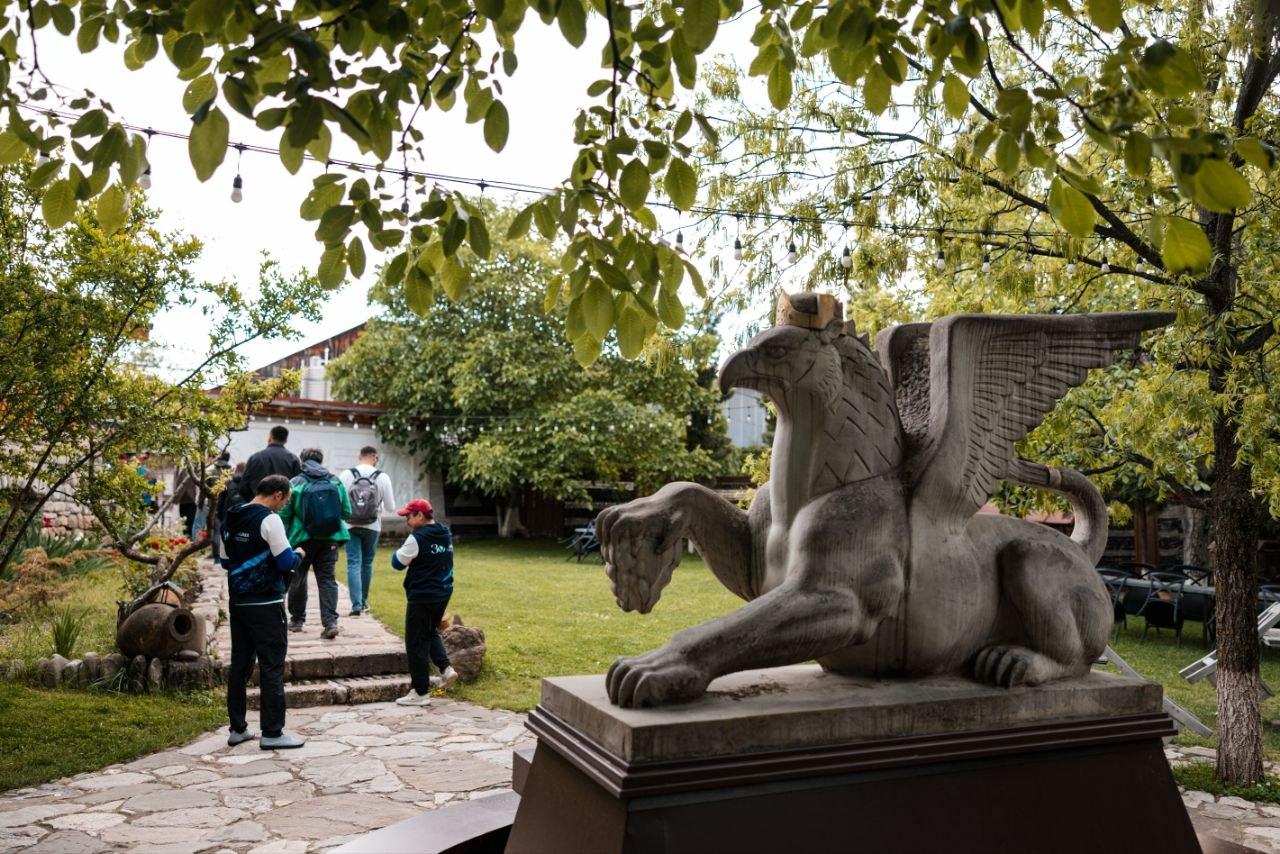
Kakheti sits two hours from Tbilisi, which makes it the only wine region in our practice a group can visit and return from in one day without the day feeling like a race. The format works for a reason only loosely connected to wine: people seat themselves differently at a long table than in a meeting room, and the conversations happen between departments instead of inside them.
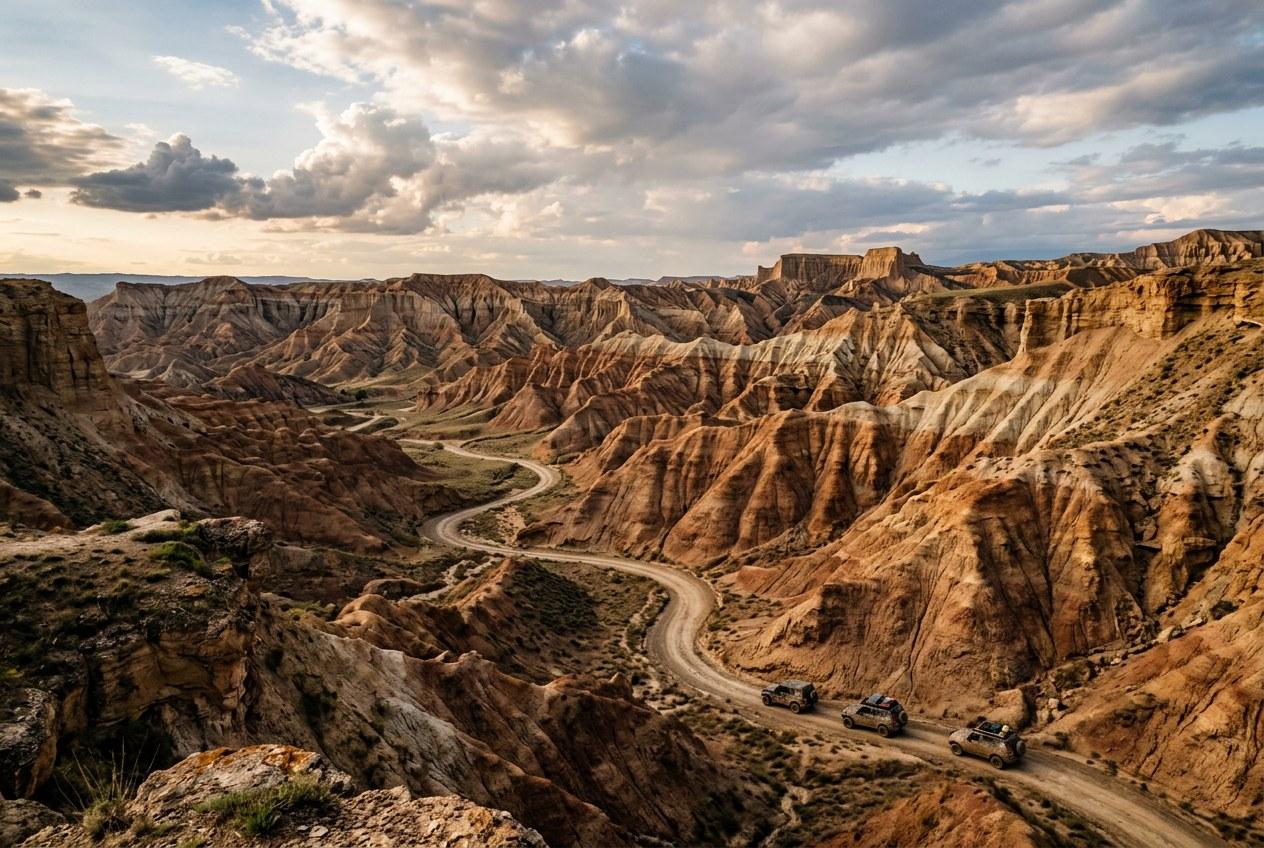
We do not promise the team comes back closer after a dinner in Kakheti. We describe what we observe: colleagues who have not met in person all year spend four hours at one table. What you do with that afterwards is a manager's job, and it gets done back home. Our wine and food programmes start at 95 dollars per person; the formats are set out on the wine tours page, and the active side, jeep expeditions included, sits under adventure programmes.
Five mistakes we see most often
- The programme gets written before the dates. A beautiful day-by-day plan drafted before the hotel is confirmed gets rewritten almost entirely. The order is dates, venue, hotel, programme.
- One night per region. Tbilisi, the mountains and Kakheti in three nights works on paper only. We advise a minimum of three nights in one region plus day trips.
- No free time at all. Three consecutive days scheduled 08:00 to 23:00 end with half the room on their phones by day three. Two free evenings out of four is a working ratio.
- The drinks package is left vague. This is the line that produces surprise invoices. Agree the format before the event, in writing, with a ceiling.
- No plan B for the mountain days. Weather in the highlands decides for you. The backup venue and backup route belong in the programme stage, not in the morning of the trip.
An honest caveat: the offsite is not always the answer
Employees are noticeably cooler on corporate travel than HR departments are. In the r/remotework thread on offsites the top replies all point the same way: forced social activities are a bad idea, split the budget into bonuses instead, and if the trip has to happen, keep it short. A separate r/antiwork thread titled "Company retreats are a scam" collected close to six hundred votes. In r/chubbytravel, where the upper end of the market gets discussed, one experienced planner notes that employees on a previous offsite got altitude sickness because the resort was chosen without checking elevation.
Read all of that as a specification. An offsite works when it has a real agenda, voluntary evening formats and a short duration. We recommend three nights as a minimum, because two nights never let the programme open up, and we rarely advise more than five. If the only goal is to thank the team, cash sometimes does it better, and we will say so on the first call. Why the format does tend to land in Georgia is covered separately in our piece on team building in Georgia.
Frequently asked
How far ahead should we start planning a corporate offsite in Georgia? For 40 to 80 people, 10 to 14 weeks. Under 25 people is realistic in 5 to 6 weeks. Above 150 participants, allow four months, particularly for September and October.
What does a corporate offsite in Georgia cost per person? Hotel class, number of nights and dinner formats set the range. Public benchmarks for the international market: 1,400 to 3,000+ dollars per person excluding flights and 1,000 to 2,500+ pounds including flights. Georgian quotes usually land lower, though a real number only appears once the dates and the participant list exist. An average here tells you nothing.
Can we bring our own guide and coordinator? A company coordinator, yes, and it helps. A guide, no: per the analysis of Decree No. 70, the 2026 quota for foreign nationals in the guide profession is zero. The ground half is delivered by a Georgian operator.
Which month is best for a corporate offsite in Georgia? September and October bring the best weather and rtveli, and they are also the scarcest. May and June are nearly as good and considerably more available. For ski formats, January and February, inside the Gudauri season that runs from late December to late April.
Do participants need a visa? It depends on citizenship, and the rules change. Check current status on the official portal evisa.gov.ge and send us the list of citizenships with the participant list. We prepare invitation letters from our side.
Are three days enough? Three nights is our minimum, and it fits one working day, one day out of town and one free evening. Two days becomes a flight with a dinner in the middle.
What if part of the team does not want to go? Make evening formats voluntary and say so early and out loud. That is the one thing that reliably works: in offsite discussions people complain about compulsion rather than about the country or the hotel.
How do we check that a contractor operates legally? Ask for the registration in the National Tourism Administration's database of tourism activity subjects and the liability insurance. Since 1 June 2026 this is a legal requirement, with fines starting at 500 GEL.
What to send us for a quote
A good offsite abroad is the result of questions asked on time, and nearly all of them belong to the first two weeks of preparation.
Send us the date window, the approximate headcount, the departure cities and one sentence about why you are taking the team out. That is enough for us to come back with a first line-by-line estimate and an honest read on what your dates can carry. We have worked in Georgia for fifteen years, more than 60% of our clients return with a second project, and the conversation always opens with logistics rather than with a deck. Let's discuss your project: hello@meetsygeorgia.ge, +995 555 655 445, Telegram @meetsygeorgia. Ready-made formats and locations sit under corporate tours and in our roundup of the top 5 locations for corporate events in Georgia.