By day three of an offsite we usually see the same scene: a long table in Kakheti, and around it people who spent a year in the same chat without ever talking for longer than fifteen minutes. Nobody assigned the seating. It arranged itself, and it did not match the org chart.
That is the whole of what we can honestly promise. Not cohesion, not a dream team, not a lift in quarterly numbers — just four hours in which people ended up next to each other without an agenda. What happens next is the manager's job. Below: why a change of setting genuinely helps, why the objection that team building is a waste of time is fairer than it sounds, and what an offsite that survives that criticism looks like.
What an offsite actually changes
An office assigns roles before anyone opens their mouth. There is the meeting room, the seat at the head of the table, the speaking order that repeats itself every week. A trip removes that layout mechanically: a coach has no seats by job title, roles on a route get handed out by task, and at a shared table the conversation runs between departments instead of inside them.
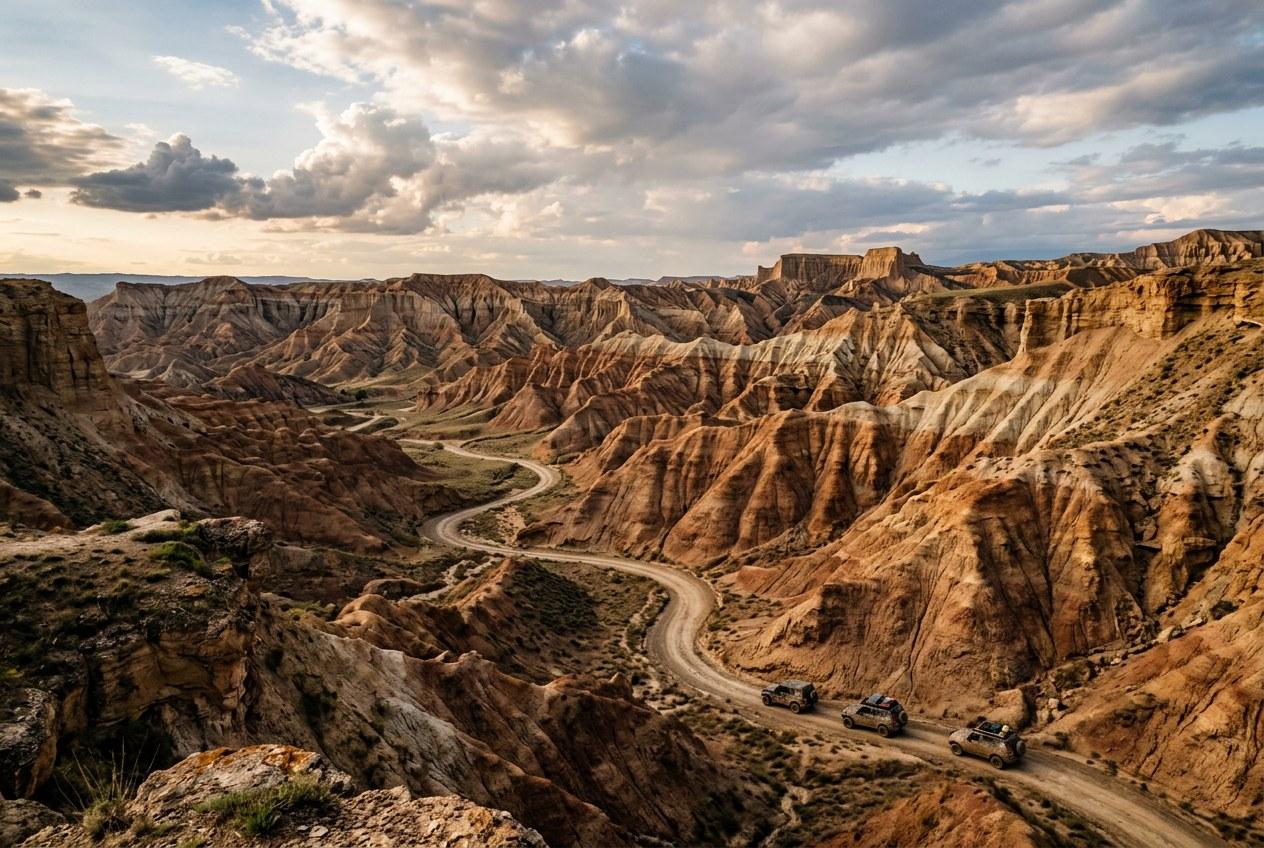
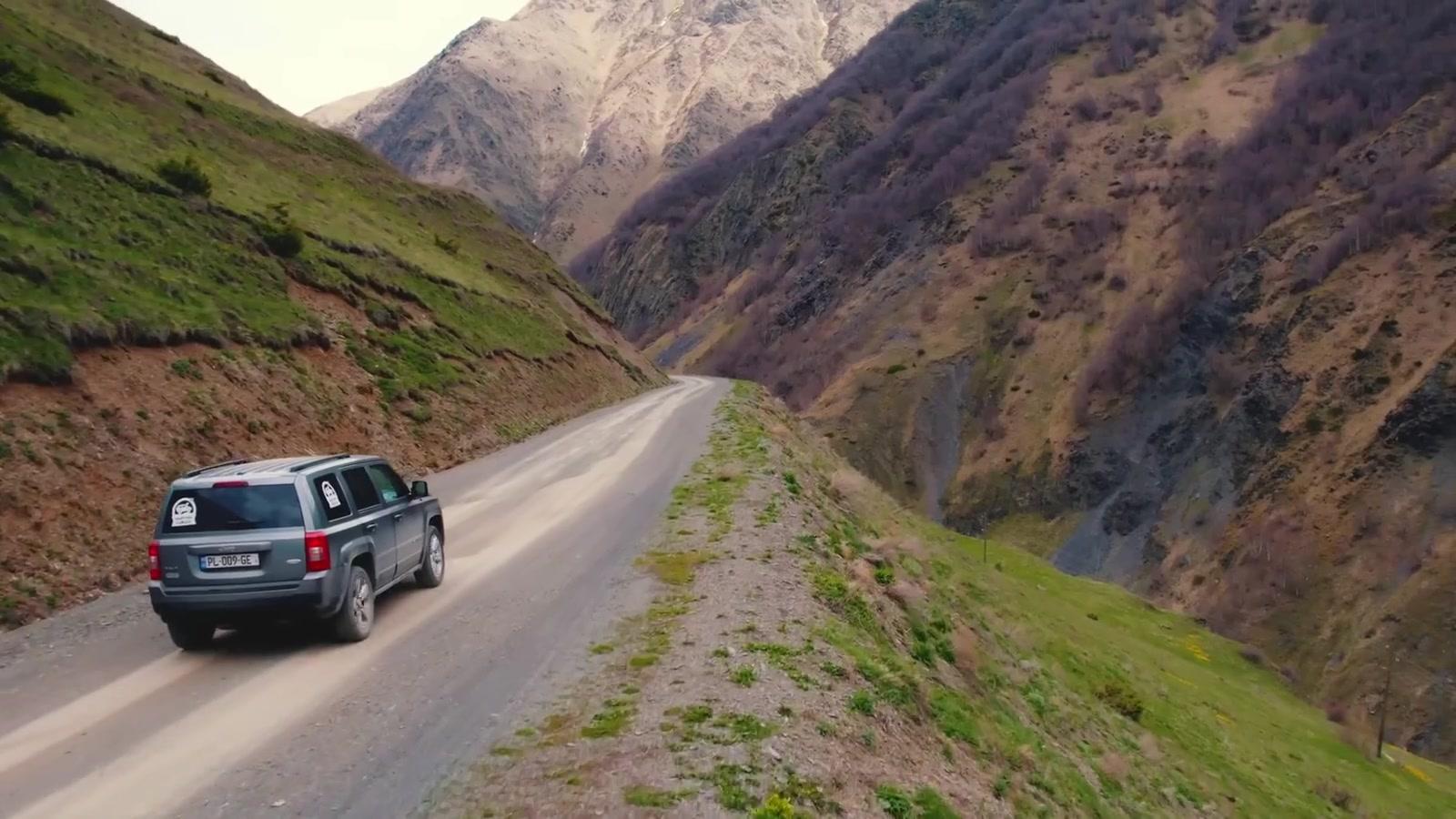
The second effect is a shared physical context. When a group carries crates through a vineyard, or a crew of four has to find the right turn on a dirt road, negotiation happens in the moment rather than at Monday's status call. That is not a methodology or a training exercise; it is simply a different environment, and people get acquainted faster in it.
The third is time. We rarely see anything shift on day one. People arrive tired from travel and the evening goes on adjusting. The conversations the trip was booked for happen on days two and three, and almost never during the programme — they happen in the gaps between its items.
An offsite does not manufacture cohesion. It creates conditions in which people talk for longer than fifteen minutes. Everything after that is management work, and it happens back home.
Why "it's a waste of time" is a fair objection
We have to say this out loud, because the client will hear it from their own staff anyway. Teams tend to be noticeably cooler on corporate trips than HR departments are.
In this r/remotework thread on offsites the top answers all say the same things: forced social activities are a bad idea, split the budget and pay it out as bonuses, and if a trip has to happen, keep it as short as possible. A separate r/antiwork thread titled "company retreats are a scam" collected close to six hundred upvotes. On r/changemyview there is a long discussion arguing that team building activities waste time and money, and a large share of the arguments there are correct.
What matters is what the criticism is aimed at. It is almost never about the country or the hotel. It is about compulsion, about events run because "it was time", and about activities part of the group physically cannot join — in r/corporate's thread on what companies actually do on retreats, half the complaints are exactly that. Business owners in an r/smallbusiness discussion make the same observation from the other side: the offsites that fail are almost always the ones where the purpose was never said out loud.
Read it as a specification, not as a verdict on the format.
Three conditions that make a trip worth it
The purpose is stated out loud. Not "bring the team together" but something checkable: get a distributed team into one room, run a strategy session, introduce two teams after an acquisition, thank people for the year's result. Naming the purpose before choosing a country saves more money than negotiating the quote.
Evening formats are optional, and everyone is told so in advance. This is the single thing that reliably removes resistance. A programme where dinner is mandatory and absence is "noted" works against itself.
The trip is short. Our minimum is three nights; two do not give the programme room to unfold. We rarely recommend more than five. The pattern we see most often with distributed teams is described in that same r/remotework thread: fly in Monday, heavy working sessions Tuesday and Wednesday, evenings out in the city, leave Thursday.
A fourth, more technical point: free time is planned as its own line, with two or three optional choices per slot. Unplanned gaps are the most common source of participant complaints.
Why Georgia tends to work
Worth being precise here rather than complimenting the country. Three concrete things do the work.
Compactness. Tbilisi to Gudauri is about 120 km, 2 to 2.5 hours (wander-lush.org, Wikipedia); Kakheti is roughly two hours away. The meeting room and the mountains fit inside one day, so a change of setting does not cost you the business half of the trip.
The shape of the table. A Georgian supra is built so the food is shared rather than plated, and the conversation runs across the whole table instead of pairing up neighbours. For a group that came to get to know each other, that outperforms any facilitation exercise.
Shared physical work with a visible result. During rtveli, the grape harvest in the second half of September (georgia.to), the team cuts bunches and carries crates. Age and fitness stop being a barrier, and in the evening the person responsible for the food is the same one who showed you how to hold the secateurs that afternoon. We build those programmes as wine tours.
Logistics remain logistics: lifts, grapes and mountain road conditions do not move to fit a corporate schedule. How that maps onto the calendar is covered in our piece on team building formats by season.
When you do not need an offsite
The most useful first call is the one where it turns out the team should stay home. This is our working table.
| Objective | Does a trip help? | What we suggest |
|---|---|---|
| Get a distributed team together in person | Yes, the best case for it | Three nights, plenty of unstructured time, minimal activities |
| Run a strategy session | Yes, given a room and a facilitator | One strong activity a day, the rest is work; mountains as backdrop |
| Introduce two teams after a merger | Yes | Mixed crews on the road or shared physical work, not a reception |
| Thank people for the year's result | Sometimes | Cash is sometimes more honest, and we will say so |
| Repair a conflict between individuals | No | A trip amplifies what is already there; resolve it before you travel |
| Compensate for broken goal-setting or bonuses | No | Three days in the mountains buy a pause, then everyone returns to the same setup |
| Lift numbers before quarter end | No | We will not promise a lift; too much of it sits outside the trip |
A separate note on people who cannot or do not want to travel. The reasons can be medical, family or simply personal, and the alternative is built in from the start rather than invented a week out. Declining the trip must not read as declining the reward, or the programme backfires. We wrote about reward trips and their logic in our breakdown of incentive travel.
What we see from our side
We have been running corporate groups in Georgia for fifteen years, from 20 to 1,200 people, and more than 60% of clients come back with a second project. From that seat two things are visible that rarely make it into a deck.
First: clients most often ask us to add activities, and what usually helps is the opposite — remove one and leave two free evenings out of four. A schedule packed from 08:00 to 23:00 for three days running ends with half the room on their phones by day three.
Second: people do not come back after the most spectacular programmes. They come back after the ones where everything ran on time, the coaches arrived when they said they would, and the mountain day had a backup. Our team building starts from 60 dollars per participant, but the number is the last thing that determines the outcome.
How to tell whether it worked
We do not publish percentages like "87% report improved communication": you cannot measure that honestly, and any such figure is marketing. What you can fix before the trip and look at a quarter later:
- how many people from the group now deal with each other directly instead of routing through a manager;
- how many volunteered for the next trip themselves;
- what the people who did not go say — is it read as a privilege or as an obligation;
- retention inside the selected group, if the trip was an incentive.
None of these metrics is an agency's achievement, and we do not claim them. Our responsibility is feasibility: transport, venues, timing, people on the ground and backup scenarios. What happens to the team afterwards is done by its managers.
Frequently asked questions
Does team building really work, or is it a ritual? It works as a condition, not as a cause. A trip creates an environment where people talk longer and outside their roles. If nothing changes in management afterwards, the effect fades quickly — and the criticism of the format is fair in that case.
Why can't we do the same thing in the office? You can, and some objectives are cheaper solved that way. But the office preserves the familiar roles and the interruptions: people step out for calls, return to email, sit with the same group. A trip removes that for a few days, and that is what you are paying for.
What if part of the team does not want to go? Make the evening formats optional and announce it clearly and early. And build in an alternative for those who do not travel at all. In offsite discussions people complain about compulsion, not about the country or the hotel.
How many days are needed? Three nights is the working minimum: one for arrival, one substantive, one free evening. Two nights turn into a flight with a dinner in the middle. Beyond five days the group tires while accommodation and catering scale linearly.
Does the programme have to be active? No. For a distributed team meeting in person for the first time the opposite works better: long dinners, shared drives, evenings with nothing scheduled. Activities are secondary.
Will the trip improve our numbers? We do not promise that. Too much sits outside the trip. Fixing a metric before departure and looking at it a quarter later is realistic; percentages in marketing material are not.
Would cash be cheaper than a trip? Sometimes it is more honest. A bonus is universal but dissolves into someone's budget and creates no shared experience. If the only objective is to thank the team, we will say so on the first call.
Where do we start? With the purpose in one sentence, then the dates and the headcount. The programme comes after that. Reversing the order breaks the budget — how exactly is set out in planning a corporate offsite from abroad.
If you have a team, a date and one sentence about why you are bringing them, that is enough for us to come back with a day-by-day programme and an honest note on where the trip is unnecessary. Talk to us: hello@meetsygeorgia.ge, +995 555 655 445, Telegram @meetsygeorgia. Locations for different objectives are in our top five locations for corporate events.